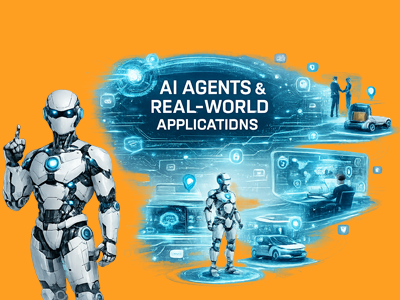

Artificial Intelligence (AI) has rapidly evolved from a theoretical concept into a transformative force shaping industries, economies, and everyday life. From personalized recommendations on streaming platforms to autonomous vehicles and intelligent chatbots, AI is redefining how humans interact with technology. This comprehensive guide explores the foundations, key concepts, and real-world applications of Artificial Intelligence, helping you understand both its potential and practical impact.
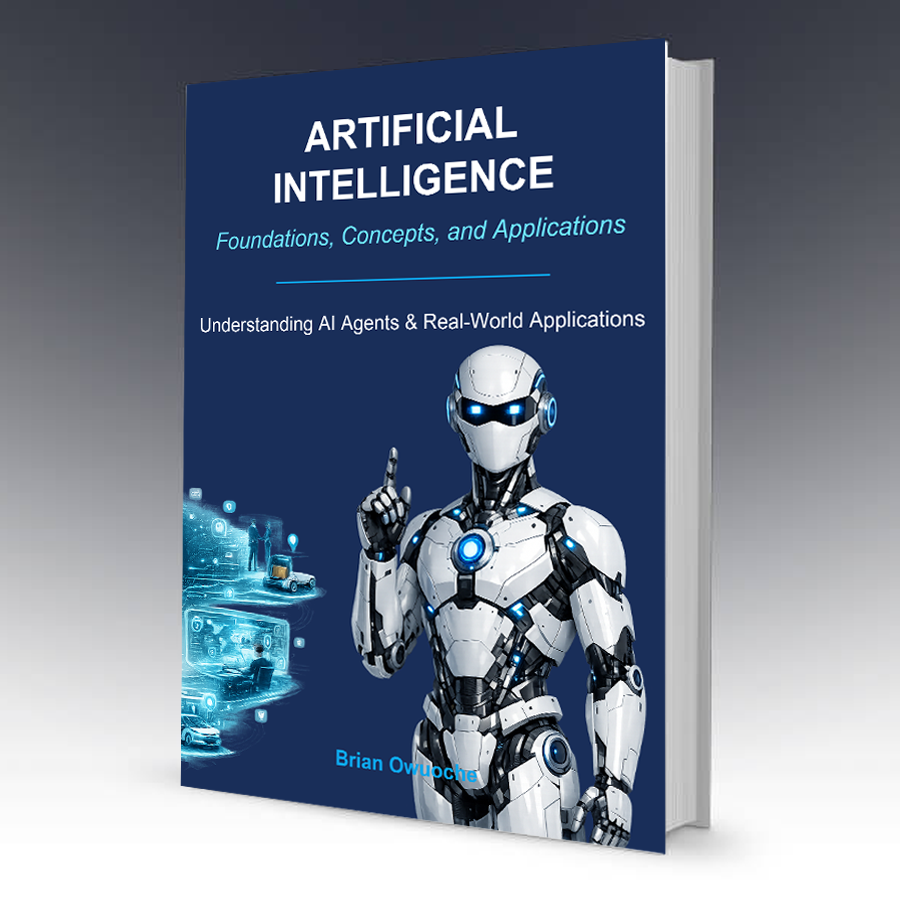
AI Fundamentals eBook
Artificial Intelligence: Foundations, Concepts, and Applications is a comprehensive guide that introduces readers to the fundamental principles, core theories, and practical uses of AI in today’s digital world. We explore the building blocks of Artificial Intelligence, including data, algorithms, and computational models, while breaking down key concepts such as machine learning, deep learning, natural language processing, and computer vision in a clear and accessible way.
More features: real-world AI applications across industries like healthcare, finance, education, business, and transportation.
What is Artificial Intelligence?
Artificial Intelligence refers to the simulation of human intelligence in machines that are designed to think, learn, and solve problems. These systems can perform tasks that typically require human intelligence, such as decision-making, speech recognition, and visual perception.
AI systems rely on data, algorithms, and computational power to mimic cognitive functions. The ultimate goal is to create machines capable of independent reasoning and adaptive learning.
Foundations of Artificial Intelligence
Understanding AI begins with its core foundations, which combine multiple disciplines:
1. Mathematics and Statistics
AI relies heavily on probability, linear algebra, and optimization techniques to process data and make predictions.
2. Computer Science
Programming languages, data structures, and algorithms form the backbone of AI development.
3. Cognitive Science
AI draws inspiration from human thinking, learning, and problem-solving processes.
4. Data Science
Large datasets are essential for training AI models, enabling them to identify patterns and make accurate decisions.
Key Concepts in Artificial Intelligence
To fully grasp AI, it’s important to understand its core concepts:
1. Machine Learning (ML)
Machine Learning is a subset of AI that enables systems to learn from data without explicit programming. It includes:
- Supervised Learning
- Unsupervised Learning
- Reinforcement Learning
2. Deep Learning
A specialized branch of ML that uses neural networks with multiple layers to process complex data such as images, speech, and text.
3. Natural Language Processing (NLP)
NLP allows machines to understand and interpret human language, powering chatbots, translation tools, and voice assistants.
4. Computer Vision
This enables machines to interpret and analyze visual information from the world, such as facial recognition and object detection.
5. Neural Networks
Inspired by the human brain, neural networks consist of interconnected nodes that process and transmit information.
Types of Artificial Intelligence
AI can be categorized into three main types:
1. Narrow AI (Weak AI)
Designed for specific tasks, such as recommendation systems or virtual assistants.
2. General AI (Strong AI)
A theoretical form of AI capable of performing any intellectual task a human can do.
3. Superintelligent AI
An advanced concept where AI surpasses human intelligence across all domains.
Real-World Applications of Artificial Intelligence
AI is already transforming multiple industries:
1. Healthcare
- Disease diagnosis and prediction
- Drug discovery
- Personalized treatment plans
2. Finance
- Fraud detection
- Algorithmic trading
- Credit risk assessment
3. Education
- Intelligent tutoring systems
- Automated grading
- Personalized learning experiences
4. Business and Marketing
- Customer behavior analysis
- Chatbots and virtual assistants
- Predictive analytics
5. Transportation
- Autonomous vehicles
- Traffic optimization
- Smart logistics
6. Agriculture
- Precision farming
- Crop monitoring
- Yield prediction
Benefits of Artificial Intelligence
- Increased efficiency and productivity
- Enhanced decision-making
- Automation of repetitive tasks
- Improved accuracy and reduced human error
- Innovation across industries
Despite its advantages, AI presents several challenges:
1. Data Privacy
Large amounts of personal data raise concerns about security and misuse.
2. Bias and Fairness
AI systems can inherit biases from training data, leading to unfair outcomes.
3. Job Displacement
Automation may replace certain jobs, requiring workforce adaptation.
4. Transparency
Complex AI models can be difficult to interpret, making decision-making opaque.
The Future of Artificial Intelligence
The future of AI promises even greater advancements, including:
- More human-like interactions
- Enhanced automation across sectors
- Integration with emerging technologies like IoT and quantum computing
AI is expected to become more accessible, enabling businesses and individuals to harness its power for innovation and growth.
Final Thoughts
Artificial Intelligence is no longer a futuristic concept—it is a present-day reality shaping the world around us. By understanding its foundations, core concepts, and applications, individuals and businesses can better prepare for an AI-driven future.
Whether you’re an entrepreneur, developer, or researcher, embracing AI can unlock new opportunities and drive meaningful progress in your field.