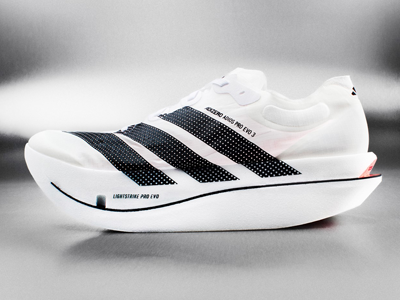

In recent years, marathon running has undergone a technological revolution – and at the center of it is Adidas. With record-breaking performances on the global stage, elite athletes are not just relying on training and endurance, but also on advanced footwear engineered for maximum efficiency.
In fact, the Adizero Adios Pro Evo 3 from Adidas represents the cutting edge of marathon racing innovation, engineered with an ultra-lightweight design, responsive Lightstrike Pro foam, and energy-efficient carbon-infused rods that optimize forward propulsion and reduce energy loss with every stride.

Built to maximize running economy, the shoe minimizes ground contact time while enhancing energy return, allowing elite athletes to sustain faster paces over long distances. This level of biomechanical efficiency played a crucial role in enabling Sebastian Sawe to achieve a historic sub-two-hour marathon, reportedly clocking 1:59:30, as the shoe’s advanced materials and propulsion system effectively reduced fatigue and improved stride consistency throughout the race.
But what exactly makes these shoes so powerful?
1. Carbon Plate Technology: The Game Changer
One of the most revolutionary features in modern Adidas racing shoes is the carbon-infused plate embedded within the midsole. This plate acts like a spring, reducing energy loss during toe-off and improving running economy.
Instead of the foot bending naturally and losing energy, the carbon plate stabilizes the motion and propels the runner forward. The result? Less fatigue over long distances and faster race times.
2. Lightstrike Pro Foam: Energy Return at Its Peak
Adidas introduced Lightstrike Pro foam, a highly responsive cushioning material that compresses and rebounds efficiently. Unlike traditional EVA foams, this advanced compound offers:
- Higher energy return
- Reduced weight
- Better shock absorption
This means runners expend less energy with each stride, allowing them to maintain speed deeper into the marathon.
3. Biomechanics Optimization
The design of Adidas marathon shoes is rooted in biomechanics – the study of human movement. These shoes are engineered to:
- Improve stride efficiency
- Reduce ground contact time
- Encourage forward momentum
By aligning with the natural motion of the foot, they help runners conserve energy and minimize injury risk.
4. Aerodynamic and Lightweight Design
Weight matters in marathon racing. Adidas has minimized shoe weight while maintaining structural integrity. The upper materials are breathable, flexible, and barely noticeable, reducing drag and enhancing comfort over 26.2 miles.
5. Proven Results in Elite Competition
These innovations aren’t just theoretical – they’ve delivered real-world results. Elite runners wearing Adidas shoes have consistently challenged and broken marathon world records, proving that technology can significantly enhance human performance when combined with talent and training.

6. The Controversy: Technology vs. Fair Play
The rise of high-tech running shoes has sparked debate in the athletics community. Critics argue that such innovations provide an unfair advantage, while supporters view them as a natural evolution of sports science.
Organizations like World Athletics have even introduced regulations to ensure fairness while still allowing innovation.
Conclusion
The marathon world record is no longer just about physical endurance – it’s also about engineering excellence. Adidas has successfully merged science, technology, and athletic performance to redefine what’s possible in long-distance running.
As shoe technology continues to evolve, one thing is certain: the future of marathon running will be shaped as much in the lab as it is on the track.