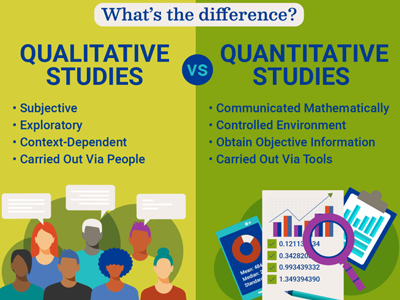

Choosing the right research method is one of the most important decisions a researcher makes. Whether you are writing a dissertation, conducting academic research, evaluating a business problem, or carrying out a social science study, the research approach you choose can significantly influence your findings.
Two of the most widely used approaches are qualitative research and quantitative research. Although both aim to generate reliable knowledge, they differ considerably in their objectives, data collection methods, analysis techniques, and types of questions they answer.
So, what is the difference between qualitative and quantitative research? What are the advantages and disadvantages of each approach? And which method should you choose for your research project?
Let’s explore these questions in detail.
What Is Qualitative Research?
Qualitative research is a research approach used to understand people’s experiences, opinions, attitudes, motivations, behaviors, and perceptions.
Rather than focusing primarily on numerical measurements, qualitative research collects non-numerical data, such as words, descriptions, observations, and experiences.
For example, a researcher investigating why university students struggle with online learning might conduct interviews with students and ask questions about their experiences.
Common qualitative research methods include:
- Interviews
- Focus groups
- Observations
- Case studies
- Open-ended questionnaires
- Document analysis
- Ethnographic research
Qualitative research is particularly useful when researchers want to understand why or how something happens.
Example of a Qualitative Research Question
“How do university students experience online learning?”
This question seeks detailed information about students’ experiences rather than a numerical measurement.
Pros of Qualitative Research
1. Provides In-Depth Information
One of the biggest advantages of qualitative research is its ability to provide detailed insights into people’s experiences and perspectives.
Instead of simply knowing that 60% of participants experienced a particular problem, qualitative research can help explain why they experienced it and how it affected them.
2. Explores Complex Issues
Some research topics are difficult to understand using numbers alone.
Topics involving emotions, personal experiences, culture, social relationships, attitudes, and motivations often benefit from qualitative research.
3. Allows Participants to Express Themselves
Qualitative methods such as interviews and open-ended questions allow participants to explain their views in their own words.
This can reveal information that researchers may not have anticipated when designing the study.
4. Flexible Research Process
Qualitative research can be relatively flexible. Researchers may modify questions or explore new themes as they discover more information during the research process.
This makes qualitative research particularly useful for exploratory studies.
5. Useful for Generating New Ideas
Qualitative research can help researchers identify new concepts, theories, relationships, or problems that may later be tested using quantitative methods.
Cons of Qualitative Research
1. Smaller Sample Sizes
Qualitative studies often involve relatively small samples because collecting and analyzing detailed information from many participants can be time-consuming.
A small sample may limit how confidently findings can be generalized to a larger population.
2. Time-Consuming
Conducting interviews, transcribing recordings, coding responses, identifying themes, and interpreting findings can require considerable time.
3. Potential Researcher Bias
Because qualitative research often requires interpretation, the researcher’s personal assumptions or perspectives may influence how data is analyzed.
Researchers therefore need to use appropriate procedures to improve credibility and reduce bias.
4. Difficult to Quantify
Qualitative findings are often descriptive rather than numerical. This can make statistical comparison more difficult.
5. Limited Generalizability
Findings from a small group of participants may provide valuable insights but may not necessarily represent the experiences of an entire population.
What Is Quantitative Research?
Quantitative research is a research approach that focuses on collecting and analyzing numerical data.
Researchers use quantitative methods to measure variables, identify patterns, test hypotheses, examine relationships, and make statistical comparisons.
For example, a researcher studying online learning might survey 1,000 university students and measure their satisfaction using a scale from 1 to 5.
Common quantitative research methods include:
- Surveys
- Structured questionnaires
- Experiments
- Statistical analysis
- Longitudinal studies
- Cross-sectional studies
- Secondary data analysis
Quantitative research is particularly useful when researchers want to determine how many, how much, how often, or to what extent something occurs.
Example of a Quantitative Research Question
“What percentage of university students are satisfied with online learning?”
This question requires numerical data that can be measured and statistically analyzed.
Pros of Quantitative Research
1. Produces Measurable Results
Quantitative research produces numerical data that can be analyzed statistically.
For example, researchers can calculate averages, percentages, correlations, differences between groups, and other statistical measures.
2. Can Use Large Samples
Quantitative studies can often involve large numbers of participants.
A larger sample can improve the ability to identify patterns within a population, provided that the sampling method is appropriate.
3. Supports Statistical Analysis
Researchers can use statistical techniques to test hypotheses and investigate relationships between variables.
This makes quantitative research particularly useful for studies that require measurable evidence.
4. Easier to Compare Results
Numerical data can make it easier to compare groups, locations, time periods, or other variables.
For example, a researcher could compare customer satisfaction between two companies using the same measurement scale.
5. Greater Potential for Generalization
When a study uses an appropriate sampling strategy and a sufficiently representative sample, quantitative findings can potentially be generalized to a wider population.
Cons of Quantitative Research
1. May Lack Depth
Numbers can show what is happening without necessarily explaining why it is happening.
For example, a survey may show that 70% of customers are dissatisfied, but it may not explain the underlying reasons for their dissatisfaction.
2. Less Flexible
Quantitative research generally relies on predetermined questions, variables, and measurement instruments.
Once data collection begins, there may be less opportunity to explore unexpected issues in depth.
3. Can Oversimplify Complex Experiences
Human experiences can be complicated. Reducing attitudes, emotions, or experiences to numerical scales may fail to capture important details.
4. Requires Appropriate Statistical Knowledge
Poorly selected statistical tests, inadequate samples, measurement errors, or incorrect interpretation can lead to misleading conclusions.
5. Research Design Can Be Resource-Intensive
Large surveys and experiments may require substantial resources, including participants, data collection tools, software, research assistants, and statistical expertise.
Qualitative vs Quantitative Research: Key Differences
The major difference between qualitative and quantitative research is the type of data they primarily use and the questions they are designed to answer.
| Feature | Qualitative Research | Quantitative Research |
| Main purpose | Understand experiences and meanings | Measure variables and test relationships |
| Data | Words, observations, descriptions | Numbers and measurements |
| Typical questions | Why? How? | How many? How much? How often? |
| Common methods | Interviews, focus groups, observations | Surveys, experiments, structured questionnaires |
| Sample size | Usually smaller | Often larger |
| Analysis | Thematic, content, narrative analysis | Statistical analysis |
| Flexibility | Generally more flexible | Generally more structured |
| Findings | Detailed and contextual | Numerical and measurable |
| Generalization | Usually more limited | Often greater potential |
| Researcher role | Interpretive | More standardized/objective |
Qualitative vs Quantitative Research: Which Is Better?
There is no universally “better” research method.
The best approach depends on your research question, objectives, available resources, study population, and type of evidence required.
Choose qualitative research when you want to:
- Explore people’s experiences.
- Understand motivations and perceptions.
- Investigate a relatively unexplored topic.
- Understand social or cultural phenomena.
- Generate theories or hypotheses.
- Obtain detailed explanations.
Choose quantitative research when you want to:
- Measure variables.
- Test hypotheses.
- Determine relationships between variables.
- Compare groups.
- Analyze numerical trends.
- Estimate frequencies or proportions.
- Produce statistically testable results.
Can You Combine Qualitative and Quantitative Research?
Yes. Researchers can combine both approaches in a mixed-methods research design.
Mixed-methods research combines qualitative and quantitative data within the same research project.
For example, a researcher studying customer satisfaction might first conduct interviews with customers to discover common concerns. The researcher could then develop a questionnaire based on those findings and distribute it to a larger sample.
This approach can provide both:
Depth + Measurement
Qualitative research can help explain people’s experiences, while quantitative research can show how common particular experiences or patterns are across a larger sample.
Qualitative and Quantitative Research Examples
Consider a study investigating employee satisfaction.
Qualitative approach
A researcher might interview 20 employees and ask:
“What factors influence your satisfaction at work?”
The researcher could analyze the interviews and identify themes such as management, salary, workload, career development, and workplace culture.
Quantitative approach
Another researcher might survey 500 employees using a satisfaction scale from 1 to 5.
The researcher could then calculate:
- Average employee satisfaction
- Percentage of satisfied employees
- Differences between departments
- Relationship between salary and satisfaction
- Relationship between workload and job satisfaction
Mixed-methods approach
A researcher could combine both approaches by conducting interviews and distributing a large-scale survey.
This can provide a more comprehensive understanding of the research problem.
How to Choose Between Qualitative and Quantitative Research
Before choosing a research methodology, ask yourself the following questions:
1. What is my research question?
If you are asking “why” or “how,” qualitative research may be appropriate.
If you are asking “how many,” “how much,” or “to what extent,” quantitative research may be more suitable.
2. What type of data do I need?
If you need detailed descriptions, opinions, experiences, or observations, consider qualitative research.
If you need numerical measurements or statistical evidence, consider quantitative research.
3. What is the purpose of my research?
Exploratory research often benefits from qualitative methods, while hypothesis testing and measurement often benefit from quantitative methods.
4. What resources do I have?
Consider your available time, budget, participants, research skills, software, and access to data.
5. Would combining methods provide better evidence?
If both numerical measurement and detailed explanations are important, a mixed-methods design may be worth considering.
Final Thoughts
The debate between qualitative vs quantitative research is not really about which method is superior. Instead, it is about selecting the methodology that best fits the research problem.
Qualitative research excels at providing depth, context, and understanding, while quantitative research excels at measurement, statistical analysis, comparison, and identifying patterns across larger samples.
For some research projects, one approach may be sufficient. For others, combining qualitative and quantitative methods through mixed-methods research can provide a more complete picture.
Ultimately, a strong research methodology begins with a clear research question. Once you understand what you are trying to discover, it becomes much easier to determine whether qualitative research, quantitative research, or a combination of both is the most appropriate choice.
Frequently Asked Questions
What is the main difference between qualitative and quantitative research?
Qualitative research primarily focuses on understanding experiences, meanings, perceptions, and behaviors using non-numerical data. Quantitative research focuses on measuring variables and analyzing numerical data using statistical methods.
Is qualitative or quantitative research easier?
Neither approach is necessarily easier. Qualitative research can require significant time for interviews, transcription, coding, and interpretation, while quantitative research may require expertise in survey design, sampling, statistics, and data analysis.
Can qualitative and quantitative research be used together?
Yes. Combining both approaches is known as mixed-methods research and can provide both detailed qualitative insights and measurable quantitative evidence.
Which research method is best for a dissertation?
The appropriate method depends on the dissertation’s research question, objectives, theoretical framework, available data, and academic requirements. Both qualitative and quantitative approaches can produce strong dissertations when properly designed and implemented.
Is qualitative research reliable?
Yes. Qualitative research can produce rigorous and credible findings when researchers use appropriate sampling, data collection, analysis, documentation, and procedures for establishing research quality.
Is quantitative research more scientific than qualitative research?
Not necessarily. Both are established research approaches. They answer different types of questions and use different ways of producing and evaluating evidence. The appropriate method depends on the research problem rather than the assumption that one approach is inherently more scientific.

AI Fundamentals eBook
Artificial Intelligence: Foundations, Concepts, and Applications is a comprehensive guide that introduces readers to the fundamental principles, core theories, and practical uses of AI in today’s digital world. We explore the building blocks of Artificial Intelligence, including data, algorithms, and computational models, while breaking down key concepts such as machine learning, deep learning, natural language processing, and computer vision in a clear and accessible way.
More features: real-world AI applications across industries like healthcare, finance, education, business, and transportation.