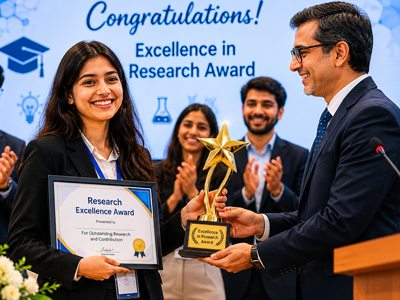

Publishing research in an academic journal is an important milestone for students, scholars, scientists, and professionals. A published research paper increases your credibility, contributes to your field of study, and helps other researchers build on your work. However, many first-time authors struggle to understand the publication process.
Read Also: Top Free Online Writing Tools for Academic Writing
In this guide, you will learn how to get your research published in a journal step by step.
Why Publishing Research Matters
Publishing your research offers several benefits:
- Builds academic and professional credibility
- Increases visibility in your field
- Helps secure scholarships, grants, or promotions
- Contributes new knowledge to society
- Expands networking opportunities with researchers worldwide
Whether you are a university student or an experienced researcher, journal publication is a valuable achievement.
Step 1: Choose a Strong Research Topic
The first step toward publication is selecting a topic that is:
- Original and relevant
- Researchable with available data
- Interesting to your target audience
- Connected to current issues or gaps in existing studies
A good research topic increases the chances of acceptance by reputable journals.
Step 2: Conduct High-Quality Research
Your journal article must be based on reliable and well-organized research. Make sure you:
- Use credible academic sources
- Collect accurate data
- Follow proper research methods
- Analyze your findings carefully
- Keep detailed notes and references
Strong evidence and clear methodology make your paper more trustworthy.
Step 3: Write Your Research Paper Properly
Most journals require papers to follow a standard structure:
Title
Create a clear, specific, and keyword-rich title.
Abstract
Summarize your research objectives, methods, findings, and conclusions in 150–250 words.
Introduction
Explain the research problem, background information, and objectives.
Literature Review
Discuss previous studies related to your topic.
Methodology
Describe how you conducted the research.
Results
Present your findings using tables, charts, or statistics where necessary.
Discussion
Interpret your findings and explain their significance.
Conclusion
Summarize the study and suggest future research directions.
References
Cite all sources correctly using the required citation style such as APA, MLA, or Chicago.
Step 4: Select the Right Journal
Choosing the right journal is critical. Consider the following factors:
- Scope and subject area
- Target audience
- Acceptance rate
- Publication fees
- Open-access options
- Journal reputation and indexing
Always read the journal’s author guidelines before submission.
Step 5: Format Your Paper According to Journal Requirements
Every journal has specific formatting instructions. These may include:
- Font size and spacing
- Citation style
- Word count
- Figure and table formatting
- File type requirements
Failure to follow formatting rules can lead to immediate rejection.
Step 6: Check for Grammar and Plagiarism
Before submission:
- Proofread your paper carefully
- Use grammar-checking tools
- Ensure originality
- Avoid plagiarism completely
- Verify all citations and references
Many journals use plagiarism detection software, so originality is essential.
Step 7: Submit Your Research Paper
Most journals use online submission systems. During submission, you may need to provide:
- Author details
- Keywords
- Abstract
- Cover letter
- Conflict of interest statement
Write a professional cover letter explaining why your research is valuable to the journal’s readers.
Step 8: Prepare for Peer Review
After submission, your paper goes through peer review. Experts in your field evaluate:
- Research quality
- Originality
- Accuracy
- Clarity
- Relevance
The journal may:
- Accept the paper
- Request revisions
- Reject the paper
Rejections are common in academic publishing, so do not lose motivation.
Step 9: Revise and Resubmit
If reviewers request revisions:
- Respond professionally
- Address every comment carefully
- Explain changes clearly
- Improve weak sections of the paper
A well-revised manuscript has a much higher chance of acceptance.
Step 10: Promote Your Published Research
Once published, share your research through:
- Academic social networks
- University websites
- Conferences and seminars
- LinkedIn and professional platforms
- Research repositories
Promoting your work increases citations and visibility.
Common Mistakes to Avoid
Many researchers fail to publish because of these common mistakes:
- Submitting to the wrong journal
- Weak research methodology
- Poor grammar and formatting
- Lack of originality
- Ignoring reviewer comments
- Incomplete references
Avoiding these errors can improve your publication success rate.
Tips for First-Time Researchers
If this is your first journal submission:
- Start with smaller journals
- Work with a mentor or supervisor
- Read published papers regularly
- Attend academic workshops
- Practice academic writing consistently
Publishing becomes easier with experience.
Final Thoughts
Getting your research published in a journal may seem challenging, but the process becomes manageable when approached step by step. Focus on producing quality research, writing clearly, following journal guidelines, and responding positively to feedback.
Persistence is key in academic publishing. Even experienced researchers face rejection before achieving publication success. Continue improving your work, learning from feedback, and submitting to appropriate journals.
With preparation and dedication, you can successfully publish your research and contribute valuable knowledge to your field.

AI Fundamentals eBook
Artificial Intelligence: Foundations, Concepts, and Applications is a comprehensive guide that introduces readers to the fundamental principles, core theories, and practical uses of AI in today’s digital world. We explore the building blocks of Artificial Intelligence, including data, algorithms, and computational models, while breaking down key concepts such as machine learning, deep learning, natural language processing, and computer vision in a clear and accessible way.
More features: real-world AI applications across industries like healthcare, finance, education, business, and transportation.